By Richard Pagliaro | Tuesday, January 20, 2026
Photo credit: Australian Open Facebook
Stars ranging from Novak Djokovic to Coco Gauff have called on Grand Slams to increase prize money.
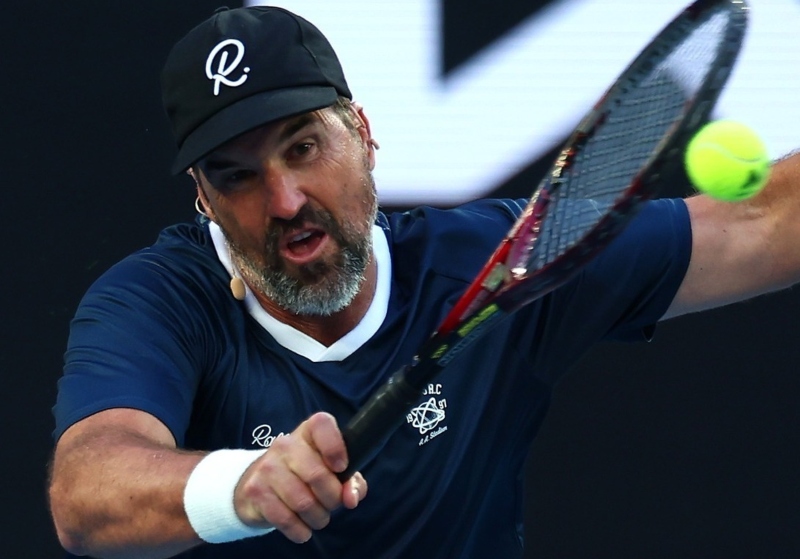
Former world No. 1 Patrick Rafter isn’t buying it.

In an interview with Code Sports, Rafter said while he’s happy players are making more prize money than they did in his day, he finds it annoying and greedy when stars continuously ask for more.
“I’m really happy [for today’s players]. But don’t keep asking for more and more,” Rafter said. “I just think it’s greed at the end of the day. I think they’re making plenty of money. It just irks me.”
Two-time US Open champion Rafter acknowledges Slams are making more revenue now than ever before, but said players should take into account the investment the majors make in infrastructure costs.
“Most of the tournaments throughout the year don’t make money. This one makes a truckload,” Rafter said of the Australian Open. “But at the same time, [the Australian Open] put all this infrastructure in, and they are still getting paid really well.
“How much money do you want? To me, I’m not a fan of it. I’m just not happy listening to it.”
One of tennis’ most philanthropic champions, Rafter famously donated about half of his champion’s check from winning the 1997 US Open to Brisbane hospital’s Starlight Children’s Foundation to aid terminally ill children.
Last March Coco Gauff joined a group of 20 top players supporting a signed letter that made significant demands to the heads of the four Grand Slam tournaments. Among them the following topics:
That Grand Slam tournaments make financial contributions to player welfare programs funded by the ATP and WTA.
That prize money should increase to a more reasonable percentage of tournament revenues, based on the contribution that players make to the overall value of the Slams.
That players should have more of a say in decisions “directly impacting competition, as well as player health and welfare.”
This month, Gauff praised the Australian Open for increasing prize money, but said it’s still not a fair piece of the pie given revenues majors make.
“From my understanding, they obviously increased the prize money this year,” Gauff told the media in Melbourne. “The percentage is still, of revenue comparison, is still not where we would like it.
“I think there’s still further conversations that have to be had, not just with the Australian Open but with all the slams. We have player representatives that have been working really hard to do that a lot for us because we can’t do it, be in person as often. But yeah, I would like to, from my last update, the collective feeling is that, yes, there’s been progress, but I still think it’s not where we would like to see it. We are grateful for the progress that has been made.”
The 2026 Australian Open will pay out a record $111.5 million (Australian dollars) in prize money, which is about $75 Million U.S. dollars, the tournament announced today.
It’s the largest prize money package in tournament history, representing a 16 percent increase over the $96.5 Million (Australian dollars) paid out at the 2025 Australian Open.
Among the AO prize money highlights:
*All singles and doubles players receive a 10 percent prize money raise.
*Qualifying players will earn 16 percent more prize money than 2025.
*AO singles champions will collect $4.15 Million checks, which is about $2.79 Million U.S. dollars and a 19 percent increase over 2025.
*AO singles finalists will earn $2.15 Million, about $1.45 Million in U.S. dollars and a 13 percent increase over last year.
Former world No. 1 Daniil Medvedev praised the AO for the prize money increase, but said percentage of revenue is the primary issue and called on the Slams to provide more transparency when it comes to their bottom line.
“I think it’s been a big, how you say, increase. That’s of course great,” Medvedev said. “I think what’s
good is now, like all the top-10 teams, not only players, because it’s a lot of course the teams behind it, and we have a representative now, talking to Grand Slam, because I think, like, in any other sport, the most important is, as you say, the percentage from the revenue.
“Because the money is big. We’re not gonna lie, right? Tennis has good money. But the percentage I think is important from the revenue. That’s the most important.
“So I don’t know if it’s even an open number of what the percentage for us is in terms of prize money. And then should be comparable to other sports. So I let our teams handle this. Hopefully it will lead to more transparency between Grand Slams and players, because that’s going to make, I think, everyone benefit from this.”
Let’s get real tennis players already making millions of $ for playing a game not saving someone’s life