The Greatest Tennis Matches in Open Era History
By Raymond Lee | Tuesday, January 6, 2026
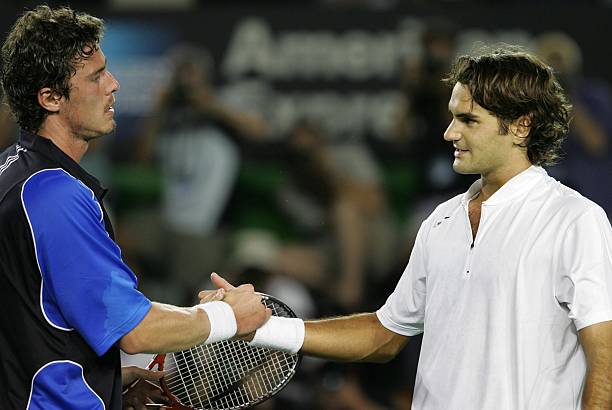
Photo credit: Vince Caligiuri/Fairfax Media/Getty
The Australian Open starts on January 18th.
To celebrate the season’’s first Grand Slam, I’ve compiled a list of some of the greatest matches of the Open Era.

Full disclosure: This isn’t going to be a Top 10 or Top 20 list of matches in chronological order. It’s a list featuring the best matches I’ve seen or written about during decades of covering tennis.
Your favorite match may be another person’s most hated match. I will discuss some matches which I think were great and I will discuss some other matches that I really don’t think were as great as some may say.
Let’s look at some of the parameters I will set to see what I think are qualities that make a great match.
First, the match must be well played by both sides with good rallies. Some players can be super dominant and if they play at top level, despite the fact the opponent is playing well, the match could be an annihilation. An example is Pete Sampras against Andrea Agassi in the 1999 Wimbledon final or Ellsworth Vines versus Bunny Austin in 1932 (Yes, I know 1932 is not in the Open Era.)
Second, the match must be close, preferably going to the final set.
Third, the match should have a dramatic conclusion. Some matches, like the 2011 Wimbledon final pitting Goran Ivanisevic against Patrick Rafter have that incredible dramatic and emotional level that can be rare in title matches.
Here’s some highlights of the 2001 Wimbledon with Ivanisevic winning his first and only Wimbledon. I think the Goran fans were very stressed out when they were watching Goran trying to serve out the match.
We also must consider the differences in power and spin with the tiny heavy wood racquets of the day versus the current high-tech racquets with modern strings. If you look at the shots of the wood players versus today’s players, you wouldn’t think they could defeat anyone today but that is far from the truth.
There are many matches considered classics that don’t deserve that label, in my view.
For example, the 1975 Wimbledon Final in which Arthur Ashe upset favored Jimmy Connors 6-1, 6-1, 5-7 6-4. It was hailed as a brilliant strategic match. Perhaps, but I don’t think so. What many fail to mention now, even in hindsight, is that Jimmy Connors had a major injury which occurred before he played in the final. That Connors even made the final was a tribute to his will to win and greatness.
The injury was hairline fractures in his shin which occurred in his first-round match against John Lloyd. The fractures got worse. Here’s a quote from Connors’ excellent book The Outsider, a memoir “I advanced to the final without losing a set, but 24 hours before my showdown with Ashe, the physio warned me once again to take it easy; he was afraid the fractures were getting worse.”
Yes, Ashe played well and who knows, Ashe may have won even if Connors was 100 percent. Ashe was an amazing player, especially when he was in his zone. However, if I had to guess who would have won that match if Connors were healthy, I’d go with Jimmy Connors.
So let’s explore my picks for the Greatest Tennis Matches of the Open Era here.
1969 Australian Open Semifinal: Rod Laver Defeats Tony Roche, 7-5, 22-20, 9-11, 1-6, 6-3
Rod Laver was the dominant champion in the Professional Ranks for years prior to Open Tennis.
Before 1968 professionals and amateurs had separate tours. The professionals, like Laver, Ken Rosewall and Pancho Gonzalez could not play the majors even though the rros had many of the top players.
Since the first Open Major was the 1968 French Open, which was the second major of 1968, the first opportunity for a Calendar Year Open Grand Slam would be in 1969. Laver was playing for his second Grand Slam, the first being his amateur Grand Slam in 1962!
Laver, as would be expected, was the top seed, Roche was the fourth seed. Both were great left-handed players with tremendous volleys. Roche’s backhand volley was one of the legendary shots of all time. Laver’s backhand volley was also superb. Both were super serve and volleyers with excellent returns. On the Australian grass courts of that time, breaking serve for either one would be extremely hard considering their respective skills.
Tony Roche was considered at the time to be perhaps the heir apparent to Laver. He had good groundstrokes as evidenced by winning the French Championships in 1966 and going to the French Championship finals several other times, losing to Fred Stolle in 1965 and Roy Emerson in 1967.
Roche gave Laver problems, partly because he was a lefty and Laver, as with just about everyone, played with very few left-handed players despite being a lefty himself.
The match obviously was exceptionally long, especially considering the second set went to Laver at 22-20!
People have raved about this match over the years.
Clearly the serve and volleying were top notch, and the returning was good overall.
The problem with playing on grass in those days is often there was an absence of long rallies where long great rallies often is a prerequisite for many people when they consider great matches.
1972 WCT Final: Ken Rosewall Defeats Rod Laver 4-6, 6-0, 6-3, 6-7, 7-6
A lot of people love this match that Rosewall and Laver played in 1972. Many have called it the greatest match ever. However, there are a lot of problems with ranking the match as the greatest ever.
Laver did not play that well. He did not serve well. His performance was erratic in that match. Laver was bageled in the second set. This, obviously, did not happen very often.
This match was known for its dramatic conclusion, but I do feel the match is overrated. Laver and Rosewall have played far superior matches to this one. One example in the 1964 Wembley Final. Wembley was a top tournament in the Professionals in which Laver won in five sets 7-5 4-6 5-7 8-6 8-6.
Let’s not forget they were both eight years younger and probably overall superior players in 1964 to what they were in 1972.
Rosewall served for the match at 5-3 in the fifth in the Wembley match, but Laver hit out, broke Rosewall and went on to win.
I don’t think this 1972 WCT Finals match belongs in the top ten matches of the Open Era. I actually believe Laver and Rosewall had a lot more than ten matches of their own that surpasses the 1972 WCT Championship. Let’s not forget while both Laver and Rosewall were still excellent players, they were not at the levels they were at their peaks.
Still the match was extremely memorable with the network preempting shows so the viewers could watch to its fantastic conclusion. This match helped the popularity of tennis immensely, so I do think it has a valid argument for being one of the most important matches of the Open Era.
Here is a video clip of the 1972 WCT championship final.
I believe their match in the1970 Dunlop International Final was superior to the 1972 WCT Final.
The 1970 Dunlop was considered by some to be the substitute for the 1970 Australian Open which was boycotted by the WCT Pros. The 1970 Dunlop had a strong field with Laver, Rosewall, Smith, Nastase, Sedgman, Ashe, Gimeno, Newcombe, Emerson among others. It may very well have been a better match than the 1972 WCT Final.
In a way you could say that Laver won a major by winning this Dunlop Tournament.
1975 WCT Championships Semifinal: Bjorn Borg Defeats Rod Laver 7-6, 3-6, 5-7, 7-6 6-2
Borg versus Laver was a dream rivalry in my mind. I thought if Borg and Laver were the same age that the contrast in styles, the great variety, dynamic play, great speed both in stroking power and mobility would make for awesome tennis almost every time they played. Both players had no weaknesses. I think it could have been even a greater rivalry than Laver against Rosewall.
Despite the fact Laver, in his prime was known for his power, I thought overall on average that Borg hit his groundstrokes harder, with more topspin and served more powerfully than Laver. Laver was the superior volleyer although Borg at his peak could be an excellent volleyer.
Borg had an amazing variety of shots and infinite ways to beat you. The same with Laver.
They played a number of excellent matches. The match played in Houston in 1974 on clay was exceptionally well played although Laver won in straight sets 7-6, 6-2.
Unfortunately, Laver was 18 years older than Borg age and retirement would end the rivalry too quickly. Here are some of the rallies in their greatest match, 1975 WCT Championships semifinals.
1977 Wimbledon Semifinal: Bjorn Borg Defeats Vitas Gerulaitis 6-4, 3-6, 6-3, 3-6, 8-6
This was a matchup of two of the best players in the world. Gerulaitis was the 8th seed while Borg was the 2nd seed and defending champion. They were both arguably the two fastest players in the world so very few shots could go beyond their reach.
I truly believe this match is sorely underrated and is one of the finest matches of the Open Era at Wimbledon.
1980 Wimbledon Final: Bjorn Borg Defeats John McEnroe 1-6, 7-5, 6-3, 6-7, 8-6
Another classic match widely called the Greatest Match Ever.
Borg had won four straight Wimbledons at this point and he was going for his fifth straight title at The Championships.
McEnroe was one of the few players who people felt had a chance to defeat Borg.
I won’t get into the details too much since this match has been discussed for decades. It’s enough to say that the match was exciting with many great shots and it went to 8-6 in the fifth.
1984 US Open Semifinal: John McEnroe Defeats Jimmy Connors 6-4, 4-6, 7-5, 4-6, 6-3
While people rave about the great match between Borg and McEnroe in 1980 at Wimbledon, I thought perhaps this match at the US Open between McEnroe and Connors was actually a better match.
McEnroe was at his absolute peak in 1984. He seemed to do whatever he wished to do on the tennis court and no one could stop him.
Connors was the two-time defending champion but he was perhaps a bit past his prime. Still it was the US Open and Connors was known for playing his most inspired matches there.
McEnroe was one of the greatest serve and volleyers ever while Connors, especially at his best, used to destroy serve and volleyers with his great return.
The rallies were breathtaking. I recall in one rally, McEnroe seemed to throw virtually every type of shot at Connors.
I am not sure if Connors and McEnroe agree, but I believe this probably was the best match they played against each other.
2000 Wimbledon Semifinal: Patrick Rafter Defeats Andre Agassi 7-5, 4-6, 7-5, 4-6, 6-3
This rivalry had so many great matches. I could have easily chosen the great Wimbledon match they played in 2001 or the Australian Open semifinal in 2001.
Rafter, while he had an excellent serve, did not have the overpowering first serve of a Sampras so Agassi could return a better percentage of the serves.
Agassi, while he also had a very good serve, was not a serve and volleyer like Rafter. He controlled the rallies on his serve from the backcourt. This enabled Rafter, who had good groundstrokes and mobility also chances in the backcourt rallies.
At that point in time Rafter had arguably the best volley in the game while Agassi had the best return and groundstrokes in the game. It was a great matchup of contrasting styles.
2005 Australian Open Semifinal: Marat Safin Defeats Roger Federer 5-7, 6-4, 5-7, 7-6, 9-7
When Roger Federer was dominating tennis in the early to mid-2000s, very few had any shot to beat him, even if they were playing well. One of those players was Marat Safin, a player of remarkable gifts.
Safin had explosive power on his groundstrokes, excellent speed and a powerful serve. If he was playing well he was capable of beating anyone as evidenced by his great US Open victory in straight sets over Pete Sampras in 2000 by a score of 6-4, 6-3, 6-3.
The Federer that Safin faced in the semifinals of the Australian was Federer at his peak. That year Federer had his best percentage record year with 81 wins and only 4 losses for 95.29 winning percentage.
That is the third highest winning percentage of the Open Era behind only John McEnroe in 1984 who had an 82-3 record and Jimmy Connors in 1974 with a record of, depending on the source, 93-4 or 99-4.
This would be a clash between two super talented players. Super rallies between charismatic competitors and fan favorites.
2008 Wimbledon Final: Rafael Nadal Defeats Roger Federer 6-4, 6-4, 6-7, 6-7, 9-7
This is the match now often called the greatest match of all time. It certainly fits all the prerequisites. Great rallies, the two best players in the world, drama and suspense.
For years Federer had the aura of invincibility. No matter what, it seemed Federer would prevail. Foes seemed defeated often before they played Federer.
Nadal, however, miraculously came on the scene. Finally, Federer had an opponent who had a reasonable chance to defeat the invincible Federer.
While Nadal defeated Federer on non-clay surfaces prior to this 2008 Wimbledon match, he had not defeated Federer on a grass surface. Nadal lost to Federer in the prior two Wimbledon finals. Nadal lost in four sets in 2006 and in five sets in 2007.
Federer was top seed again for the 2008 Wimbledon with Nadal the second seed. Some favored Nadal in this final, citing Nadal defeating Federer in the French Open final just a few weeks before with a loss of only four games in three sets.
Federer obviously owns one of the greatest forehands of all time. While his backhand is excellent it cannot be at the same level of his forehand or else he’d never lose.
Nadal’s lefty forehand, also one of the greatest ever, was quite unique in that Nadal hit with it with such violent topspin that it was hard for any player to handle off the backhand side. Also being lefty, Nadal, in the ad court would slice the serve wide to the Federer backhand and hopefully control the rally from then on.
As Uncle Toni Nadal once told Tennis Now in an interview: “Rafael’s topspin forehand to Federer’s backhand was not a Federer problem, it was a one-handed backhand problem.”
In other words: Nadal’s hellacious topspin forehand would give any one-handed backhand fits.
Federer also enjoyed hitting inside out from mid baseline to usually the right hander’s backhand. However, with Nadal, Federer was driving the shot to the great Nadal forehand, a dangerous proposition to say the least.
Nadal won the first two sets to win 6-4 6-4. Nadal won five consecutive games when down 1-4 in the second! Federer bounced back to win the next two sets in tiebreaks 7-6 7-6.
So, it went down to the final set. There were no tiebreaks in the fifth set. The final set in theory at that time could go forever. The rule has since been changed to a tiebreaker at 12 all in the fifth probably in large part of the Isner-Mahut match which ended in a shocking 70-68 final set!
Nadal served several times to stay in the match, at 4-5, 5-6, 6-7 before winning 9-7. Nadal had ended Federer’s 40 match winning streak at Wimbledon.
Just a phenomenal match. The anticipation was great in those days for these two titans of the game. They were by far the two best players in tennis. Later, Novak Djokovic and Andy Murray joined the party.
2009 Australian Open Final: Rafael Nadal Defeats Roger Federer 7–5, 3–6, 7–6, 3–6, 6–2
A lot of people love the 2008 Wimbledon Final between Federer and Nadal but for the sheer quality of the rallies, I felt the 2009 Australian Open surpassed the 2008 Wimbledon.
Yes, I know that’s not necessarily a popular opinion, but hear my reasoning.
This rally that they had during the final of the 2009 Australian Open for example is perhaps the finest rally of that tournament and perhaps the best rally of their rivalry! It’s at the 3 hour and 46-minute mark.
The only negative about this final is that the final set was in score at least, one sided in favor of Nadal at 6-2.
1987 Roland Garros Final: Steffi Graf Defeats Martina Navratilova 6-4, 4-6, 8-6
The battle of two super players. Graf in her first major final and Navratilova in her 24th major final. If memory serves, I believe Graf had not lost a match at this point in 1987. Navratilova looked to be in great form, defeating Chris Evert in the semi-final amazingly by 6-2 6-2.
Navratilova led 5-3 in the final set and served for the match at 5-4.
Unfortunately for Martina, she served two double faults in that game as Graf broke to tie the match at 5. I will say it was extremely hard to serve under the windy conditions that day.
Graf showed superb poise winning the final 8-6 in the third.
1992 Roland Garros Final: Monica Seles Defeats Steffi Graf 6-2, 3-6, 10-8
Seles and Graf had an excellent rivalry. This was probably the best and most exciting match they played against each other.
Going into the match Seles was firmly entrenched as world No. 1 over Steffi Graf. It was frankly hard for some to believe because Graf had been so invincible for a number of years. Graf won the Golden Slam (Australian, French, Wimbledon, US Open and the Olympic Singles Gold Medal) in 1988.
Seles however was making some dents into the Graf invincibility by beating Graf in the French Open Final of 1990, defeating Steffi in straight sets by a score of 7-6 6-4.
The next year 1991 Seles was easily the best player in Women’s Tennis in winning three major titles out of three majors played. Seles won the Australian, French and US Open. Seles also won the WTA Finals. For the year she had a 74-6 record and won 10 out of 16 tournaments played.
To begin 1992, Seles won the Australian Open over Mary Joe Fernandez 6-2, 6-3 to solidify her position as world No. 1. This was the situation when these two titans of tennis faced each other in the 1992 Roland Garros final. Seles was going for her third straight French Open title. Seles seemed immune to pressure. Could even the immensely talented Graf defeat the seemingly unstoppable Seles?
The matchup between the two on clay was an interesting contrast in styles and talent. Seles was perhaps the greatest returner in tennis history with power off both sides. She did not move as well as the super speedy Graf, who some thought could have been an Olympic sprinter, but Seles was quick enough.
Here’s some highlights of that fantastic match.
2009 Wimbledon Final: Roger Federer Defeats Andy Roddick 5-7, 7-6, 7-6, 3-6, 16-14
In some of the classic matches I have included here, Federer lost in a tight test.
I think that is because in order to defeat an all-time iconic champion like Federer, the opponent has to play at a near super-human level.
Federer generally had the advantage in serving against most of his opponents. However Roddick, according to the ATP statistics, was superior in holding serve at 90.1 percent to Federer’s 88.8 percent in their careers. On grass, obviously the serve is immensely important.
Great servers like Jack Kramer, John Newcombe, Boris Becker, Pete Sampras won many Wimbledons, dictating play with their fearsome deliveries.
Probably the key point was when Roddick had a simple (simple for him as nothing is all that simple in a Wimbledon final) backhand volley in the second-set tiebreak to win the set and take a two-set lead. In a moment he may rue for a lifetime, Roddick missed that backhand volley and opened the door for Federer.
Federer, as he usually does, took advantage of every opportunity that Roddick gave him to win a great match 16-14 in the fifth set. Remarkably, Federer actually out-aced Roddick, one of the most imposing servers in our sport’s history, in this title match.
1991 US Open Semifinal: Monica Seles Defeats Jennifer Capriati 6-3, 3-6, 7-6
Monica Seles was in the midst of one of the most dominant streaks in women’s tennis history at this point. She had already won the Australian Open and French Open that year but did not enter Wimbledon. So up to this point Seles was unbeaten in the majors. Seles was seeded No. 2 at the US Open, behind only the seemingly unbeatable Steffi Graf.
Seles was only 17 when she played in this match but her opponent, Jennifer Capriati was even younger at age 15. You figured that this rivalry would be one for the ages.
Capriati was an unbelievably talented prodigy. She had speed, power, consistency. The negative was her serve, which was vulnerable at times, largely because of her inconsistent toss and the fact she would often rush through serve games.
The match was a display of baseline tennis has been said to set the tone for Women’s power tennis in the future. Many champions say this match changed the course of women’s tennis ushering in the power game that Venus and Serena Williams would later elevate to even more explosive heights.
2003 US Open: Justine Henin Defeats Jennifer Capriati 4-6, 7-5, 7-6
Jennifer Capriati was a player of immense ability. She had the talent to do anything. At her best, Capriati was a fighter who delivered in some epic battles.
The service, however, could be her weakness. Make no mistake: Capriati was capable of great serves over 110 miles per hour. Shew as often was among the top few on the WTA Tour for fastest serve of the year. This is important because service speeds tend to increase over time because the racquets tend to get better and more powerful.
Justine Henin was perhaps the most versatile player of her era in women’s tennis. There was nothing she couldn’t do. Her one-handed backhand was of legendary proportions. In her prime, John McEnroe called Henin’s backhand, his favorite one hander, male or female, in the sport. Henin could do anything with the shot. Her forehand and serve were strong. Her mobility was superb.
The Henin volley was also excellent.
In 2006 and 2007, both years in which Henin was number one, she won 123 of 135 matches and 16 out of 27 tournaments played.
In other words, Henin was a complete player at her best.
This was their best match. Great battle of enormous groundstrokes, strong serves, great gets as you would expect from these two super talented players, who pushed each other all over the court and gave us a thrill ride of a tennis match.
2005 Wimbledon Final: Venus Williams Defeats Lindsay Davenport 4-6, 7-6, 9-7
Some consider this to be the greatest Wimbledon women’s match ever played.
Davenport was the top seed and Venus was the 14th seed. As all of us well know, seedings often mean nothing when it comes to Venus and Serena Williams. Often they would play reduced schedules which would lower them in the rankings. It did not take away from their greatness.
Venus was going for her third Wimbledon Championship. She won in 2000 over Lindsay and repeated the next year over Justine Henin.
The 2005 final was a rematch of the 2000 final.
So when Davenport and Venus Williams met in the final, the expectations were exceedingly high.
Remarkably, this clash exceeded expectations!
Venus broke Davenport when Davenport was serving for the match at 6-5 in the second. Venus also saved a match point in the third set. Venus Williams solidified her status as one of the great grass-court championships winning an absolute classic clash.
Remarkably, the legendary Venus Williams will play the 2026 Australian Open on a wild card at age 45, a full 21 years after she out-dueled Davenport in this classic.
1988 US Open Final: Mats Wilander Defeats Ivan Lendl 6-4, 4-6, 6-3, 5-7, 6-4
Mats Wilander had arguably his best season in 1988, winning three majors and losing only at Wimbledon. Wilander was a great baseliner with really no weaknesses. He had great mobility and fantastic stamina and an unerring serve.
Ivan Lendl was the three-time defending champion at the US Open. Many call Lendl the first power baseliner. I disagree with that. There have been power baseliners since the early days of tennis. Players like Ellsworth Vines and Don Budge in the 1930s were power baseliners, who could bludgeon opponents from the backcourt
Lendl was awesome to behold when he was playing well. He had a forehand some called the best ever, a great serve, an excellent backhand, good movement and great stamina. I think in today’s game, with the different Wimbledon grass, that Lendl would have had a great chance to win Wimbledon, the title he chased and the one that eluded him.
While both had good volleys, they could not volley at the level of a John McEnroe or a Stefan Edberg. Both players also had superb passing shots. In order to get to the net safely they had to set themselves up with excellent approaches.
Because these two were two of the finest baseliners ever, the rallies could be endless. Wilander approached far more often than Lendl, which paid excellent dividends. Wilander approached the net 131 times during the match winning 78 points. Lendl approached 77 times, winning 49 points.
2012 US Open Final: Serena Williams Defeats Victoria Azarenka 6-2, 2-6, 7-5
It’s funny, you would assume Serena Williams would have had a number of matches that would have dramatic endings that she won.
However, many of her final major victories came in straight sets or the third set would often be one sided in favor of Serena. That’s because Serena Williams is one of the greatest closers who ever lived in any sport. When Serena Williams got up on an opponent in a Slam match, she was a tennis assassin who would often bury the opposition.
This is a match which combines drama with great rallies. Azarenka was the top seed and Serena was the fourth seed.
Serena owns the best serve in WTA history and Azarenka had the best return at the time.
Here are some highlights from the match.
2010 US Open Semifinal: Kim Clijsters defeats Serena Williams 6-4, 7-5
Kim Clijsters has always amazed me with her incredible talent. She was just a gifted player, one of the few players to attain the world No. 1 ranking in singles and doubles at the same time.
Clijsters had great groundstrokes, a super return, an excellent serve, a very good volley and just amazing speed. It used to make me cringe to see her doing the splits while returning a shot. Clijsters was one of the first women to perform the sliding splits on hard courts, which is not easy (try it at your own peril!)
Then out of nowhere it seemed, she retired for a few years due to nagging injuries and a desire to get married, have children and enjoy her life. This was in 2007 at the young age of 23.
Then a few years later, late in 2009, the immensely gifted Clijsters decided to play on the WTA tour again. She played a couple of tournaments prior to the US Open, winning a few rounds before losing. She was able to defeat top players like Marion Bartoli and Victoria Azarenka but lost in a later round.
Entering the 2009 US Open, Clijsters was unseeded, but I think everyone knew that she was able to defeat anyone in the tournament.
On her way to the semifinals against Serena Williams, Clijsters defeated Bartoli, Li Na and Venus Williams. This set up the match up that was for all intents and purposes, the final.
Serena had a huge edge in their rivalry but some of those wins were not during Clijsters’ peak. Devoted Serena fans will recall when Serena won her maiden major title at the 1999 US Open, she fought back from behind to beat Clijsters in a pulsating match.
This match was a showcase for two of the most gifted players in tennis history. Serena played great yet Clijsters was more than matching her. Serena usually has the edge in mobility but against Clijsters it was basically even. The powerful groundstrokes and the great range of both players made it a fascinating match.
The video link below lists the match as the US Open final in 2009 but it’s really the semifinal. Understandable, the mis-labeling since a matchup of this magnitude can be worthy of a final.
2022 Australian Open Final: Rafael Nadal Defeats Daniil Medvedev 2-6, 6-7, 6-4, 6-4, 7-5
Considering that this match was only a few years ago, I am stunned that this match hasn’t been called the Greatest Match of All Time by at least some experts.
It had all the ingredients of a great match. It had great former world No. 1 players in the final. It had great rallies. It had an incredible comeback by a legendary player. It went to the limit and the finish was thrilling.
The win also enabled Nadal to break the three-way tie for the most majors by a male player with Djokovic and Federer. Nadal’s victory was his 21st major.
Let’s also not forget that just a few months before it looked as though Nadal may never play again.
Most of all, it was perhaps the most emotional match I have ever seen by a player who epitomizes the word warrior.
Perhaps some matches may have somewhat surpassed this match in quality of rallies. Perhaps.
However when you look at everything it very well could be the greatest match ever. If you enjoyed Nadal over the years or just plain enjoyed tennis, it very well could be the most uplifting match ever.
I’ve discussed this match more in depth in this Tennis Now article I wrote.
For me, this match epitomizes the Warrior Rafael Nadal was throughout his entire career.
Here’s the match in full.
You’ve seen my list, now it’s your turn.
Which match do you think deserves to be on this list and why?
Perhaps a Becker vs. Edberg or Agassi vs. Sampras clash?
Let me know in the comments section below.


1 comment