By Raymond Lee | Monday, July 13, 2026
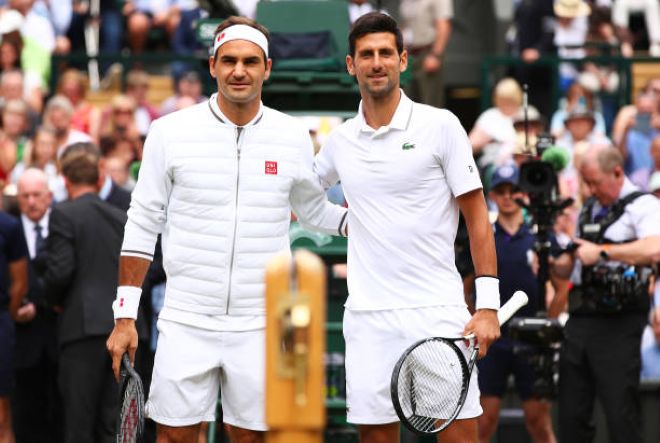
Photo credit: Clive Brunskill/Getty
Wimbledon is our sport’s most prestigious tournament.
Centre Court Wimbledon is called the Cathedral of Tennis.
In the old days when the rankings for the year-end No. 1 were tabulated, some writers would simply pick the winner of Wimbledon as the year-end No. 1.
Because of the enormous respect players and fans have had for this tournament, it stands to reason that the prestige a player gets from winning Wimbledon is unsurpassed.
Wimbledon, generally speaking, draws the finest fields. Legends like Vines, Navratilova, Lenglen, Wills, Cochet, Evert, Graf, Serena Williams, Venus Williams, Tilden, Kramer, Connors, Borg, McEnroe, Laver, Federer, Nadal and Djokovic have won this tournament. Many of the matches they played were unbelievably memorable.
Here’s my list of Greatest Wimbledon Matches in History. Let me know your reaction.
1919 Wimbledon: Suzanne Lenglen d. Dorothy Lambert-Chambers 10-8, 4-6, 9-7
Suzanne Lenglen is no doubt the most dominant tennis player of all time. She won
tournaments in which she yielded zero games. She was invincible. She almost never
lost and after World War I I don’t believe she ever lost a match.
She was great in doubles also and won virtually every doubles match and mixed doubles match that she played. Wimbledon was different in those days in that the defending champion, Dorothy Lambert-Chambers did not have to play through the draw.
Lenglen, in her first Wimbledon, moved smoothly through the draw without the loss of a set although she did have some problems with Elizabeth “Bunny” Ryan, whom she defeated by only 6-4 7-5 in the semifinals. Lenglen won the final easily against Phyllis Satterthwaite by 6-1 6-1.
Nowadays, Wimbledon would be over and Lenglen would be the champion but in those days the winner of the main draw would have to face the defending champion in the All Comers’ Final.
Suzanne lost her first service game at love but won the next 4 games to lead 4-1. You would figure a player of Lenglen’s level would coast from there. But Chambers was a great champion who won 7 Wimbledons. Chambers actually came back to lead 6-5 with a set point. Eventually Suzanne hit a beautiful volley to win the set 10-8.
Chambers came back to win the second set 6-4 and incredibly, the Great Lenglen was
in danger of losing! At 6-5 Chambers served to 40-15, double match point! On the first
match point Suzanne hit an approach shot to Chambers’ forehand. Chambers hit a fine
lob which Lenglen moved back for the overhead only to hit it off the wood for a sort of
overhead drop shot winner! Chambers then missed a drop shot on the second match
point into the net.
Eventually Lenglen won the match 9-7 in the third set for her first Wimbledon title.
The next year Lenglen and Chambers met again in the final of Wimbledon but Lenglen
dismissed her easily 6-3 6-0.
Lenglen went on to win 6 Wimbledon titles without ever losing a match she played. Not too shabby. She still holds the record for fewest games lost at Wimbledon in singles with 5 games lost in 6 matches.
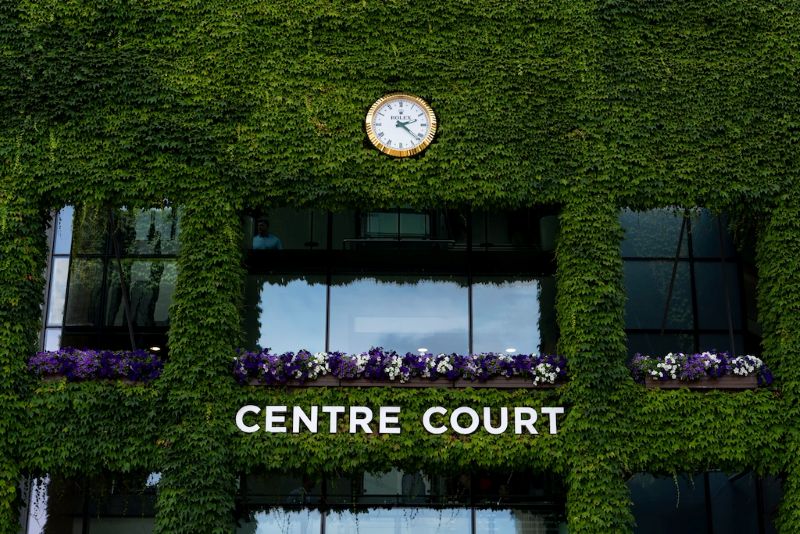
Photo credit: Antoine Couvercelle/ROLEX
Henri Cochet and his Magical Wimbledon in 1927
Notice I didn’t mention the final match score in discussing the Surreal Ride of Henri
Cochet at Wimbledon in 1927. So much of Cochet’s career and play seemed surreal.
Cochet was said to be one of the most gifted players in tennis history. He often played
in no man’s land where his incredible reflexes and footwork would allow him to take the
ball almost on the half volley and redirect it to wherever he pleased. It was said of him
that often he made the impossible shot seem easy and the easy shot seem impossible.
He apparently was a very wristy type of player which was not considered good in those
days of the heavy wood racquet. Later Fred Perry would adopt this style on his great
continental forehand. Perry was so successful with this that historically at least, many
have called Perry’s forehand the best ever.
Cochet was a magician at the net with cat-like reflexes and great touch. One of his nicknames was The Magician because of the magical shots he could hit. In the quarterfinals, Cochet lost the first two sets to Frank Hunter but as he often did, rallied to win the last three sets to reach the semifinals against a person they were already calling the GOAT of tennis Bill Tilden.
Tilden, while no longer at his peak was still an awesome player. He won 13 tournaments that year with a great 100-5 record. Tilden started fast and won the first two sets easily 6-2 6-4. The bombardment continued into the third set with Tilden leading 5-1 with the seventh game at 15-all. Cochet proceeded to win 17 consecutive points to 5-all, 30-love in the third! Eventually Cochet won the third set 7-5. Cochet won the next two sets 6-4 and 6-3 to complete the stunning comeback.
The dynamic Cochet was now to face his countryman Jean Borotra. Borotra was a great volleyer and one of the fastest men in tennis. True to form Cochet of course lost the first two sets 6-4 6-4. And as usual he won the next two sets 6-3 6-4.
The fifth set was typical of the magic that Cochet displayed during the entire tournament. Borotra led 5-3 on serve at 40-30, championship point. Borotra served and went to the net. Cochet returned and went to the net. Possibly two of the greatest volleyers perhaps in tennis history were facing each other point blank. There was a lightning exchange of volleys. Cochet was thought by many people to have a double hit, which at the time would have meant the point and the Wimbledon title for 1927 would go to Borotra. However it wasn’t called a double hit and Cochet denied it was a double hit.
All told Cochet survived 6 match points, one of them on a net cord winner! Cochet, as though it was written in a movie script won the tournament 7-5 in the fifth set.
Was it pure luck that Cochet was able to do this? I don’t think so because in later years he did it so often. Of course I don’t think he wanted to make it so dramatic that he had to survive match points.
The observers at the time thought Cochet was almost supernaturally talented. I read one time in a doubles match the ball passed Cochet at the net but he made a 360 degree turn to hit the ball for a winner. Now if that is true, that is impressive, seemingly almost impossible.
The Ellsworth Vines Tsunami -The 1932 Wimbledon final rounds
Most of the matches here were close, exciting, well played matches. But I would be remiss if I didn’t mention perhaps the most overpowering performances in Wimbledon history. That would be the last few matches of the 1932 Wimbledon played by Ellsworth Vines.
Vines, like many of the greats who won Wimbledon, was an immensely gifted and talented player. When Vines was young he injured his left arm and for years he only used his right arm to do everything. As a result his right arm grew so large it almost seemed deformed. Like Laver and Hoad, because of his astonishing strength and coordination he could hit shots beyond the capacity of even the top tennis players in the world.
Vines was a top athlete who could play many sports. He played baseball, basketball and was about 6’2” tall. Very well coordinated and an excellent mover. His smashes at Wimbledon were known to go into the Royal Box.
At Wimbledon in the last three rounds in 1932 Vines hit with such power that
Wimbledon was in awe.
Here’s a quote from Paul Metzler’s superb book Tennis Styles and Stylists–“Vines was only nineteen when, in 1931, he swept the board in U.S. major tournaments to
such effect that his American ranking rose from tenth to first and he became the
logical successor to Tilden. The following year he descended upon Wimbledon,
laying the opposition waste with his “violent” game, smashing some lobs so hard
that the ball bounced from mid-court into the royal box itself. In the quarterfinals
he was expected to be well tested by the powerful serving and all-round hard
hitting of the Spanish player Enrique Maier. But a strong opponent only caused
Vines to hit even harder. He won in quick time, 6-2 6-3 6-2, making the Spaniard’s
service seem almost innocuous compared to his own. Next he faced Crawford,
victor over fourth-seeded Fred Perry, and hit him off the court in so devastating a
display that Henri Cochet, watching from the stand, was heard to observe: “Pretty
good. Wonderful. Never saw anything like it.”
Later in the book, Austin was allowed to show a little more of his art than Crawford
had been, but only a little. Vines began uncertainly, and the score reached 4-all in
the first set. Veteran onlookers described the match from then on as the greatest
display of intense speed ever seen on a tennis court. Vines swept over Austin like
a heavy surf gaining force with each wave.
The score was 6-4 6-2 6-0. In his twelve service games Vines served thirty aces, the last one ending the match. The third set took only ten minutes. Some of Vines’ drives beat Austin by half the width of the court.
One of the things they said about the final point was that Vines hit the last serve with such speed that Austin claimed he did not know where the ball aced him. It does seem hard to believe but I was thinking about it the other day. Considering that the tennis balls at Wimbledon were white and harder to see, it is feasible but I still doubt it.
Vines served 30 aces in that match in only 12 service games. About 2.5 aces per game. Here’s a little bit from that finals. Pretty annoying that they don’t show much.
Relatively speaking probably the most awe inspiring last few rounds in Wimbledon
history. If Vines had today’s racquets it would be terrifying how fast he could hit it.
1935 Wimbledon: Helen Wills d. Helen Jacobs 6-3, 3-6, 7-5
Helen Wills was one of the juggernauts of tennis. At one point she went 7 years without
losing a set. Wills’ match against Suzanne Lenglen in 1926 at Cannes is one of the legendary matches in tennis history. They have written an entire book (and it was a very large book) about that one match.
Lenglen retired and Wills took over as the dominant force in women’s tennis. Helen Jacobs was considered to be Helen Wills’ rival. Frankly I think it is kind of hard to have a rivalry when one opponent (Wills) always wins but I suppose the writers of the day had to have a nice angle.
A few years earlier Wills finally lost to Jacobs when she defaulted when she was down 0-3 to Jacobs in the final set. It was the same problem that she would have at Wimbledon a few years later.
Many were down on Wills for defaulting and not letting Jacobs have a full victory. Even Wills said she regretted it. To me that is absolutely absurd. Why continue playing if you are on the verge of collapse? Why risk greater injury to yourself?
Wills was in the hospital for a month after the match. Before the tournament started Wills had been advised by her doctors not to play. She had a severe back injury, apparently a dislocation of the vertebra. Despite all the pain, Wills reached the finals of Wimbledon to face her “rival” Helen
Jacobs.
Jacobs was fit and in tournament shape. Wills was battling injury. Still Wills, with her far superior groundstrokes, won the first set 6-3 but Jacobs bounced back to win the second set 6-3. Jacobs continued that momentum into the third leading 5-2, serving for the match. The game went to 30-all with Jacobs two points away from victory. Wills broke her to get to 3-5.
Wills served to stay in the match at 3-5 down. Jacobs reached match point on Wills’ serve. Jacobs approached the net and Wills tossed up a fairly weak lob that Jacobs could put away for the tournament. Somehow a gust of wind blew the ball slightly off course and Jacobs hit the ball into the net. Wills won the last 5 games from 2-5 down in the final to win the tournament 7-5 in the third.
The rivalry, as they called it, including some exhibitions was 14 to 1 in Wills’ favor. Not exactly the type of rivalry you can put in the Evert-Navratilova category. Still, a terrific gutty match by Wills although I think that if Wills was 100% she would have annihilated Jacobs.
Here’s a bit of that final in 1935.
1971 Wimbledon Final: John Newcombe d. Stan Smith 6-3, 5-7, 2-6, 6-4, 6-4
John Newcombe has always been interesting to watch. Sometimes when he was performing at his top level and was in shape, you got the feeling it was impossible to play the serve and volley game better.
Indeed, he had the perfect weapons for the serve and volley. He of course had a huge serve, both first and second. Some have called his second serve the greatest in the history of tennis. His first serve was powerful and as Arthur Ashe essentially wrote, it was a heavy ball that could turn the racquet in your hand.
The volley was excellent on both sides, especially the forehand volley which has been called by some the greatest ever. The overhead was excellent. The problem with watching Newcombe was that he was so efficient at his best it was almost boring. Big serve, decent return, perfect volley hard and deep to the other corner.
Point over.
Stan Smith was the United States hope at that time along with Arthur Ashe. He was a terrific player for a while until injuries and age slowed him down. Smith in 1973 won the WCT Championship Finals which essentially was a major in those days over Arthur Ashe. Some overzealous sports writers in the United States were calling Stan Smith the successor to Rod Laver which I thought was a bit much. Nevertheless, Smith was a fantastic player with a great serve and volley game.
The 1971 Wimbledon was a match between the two best serve and volleyers of the time.
Newcombe was the second seed and defending champion, having defeated the great Ken Rosewall in the final in his usual five set win by 6-1 in the fifth. Laver, the top seed was upset in the quarters by Tom Gorman.
Newk defeated Ken Rosewall again in the semifinals but this time in crushing fashion by 6-1 6-1 6-3 which shows how awesome Newcombe could be when he was at his best.
Stan Smith was the fourth seed and he defeated Gorman in straight sets to reach the final against his arch rival John Newcombe. The match figured to be close and it was. Newcombe won the first set fairly easily by 6-3. In the second set however at 4-all, Smith attempted a passing shot that Newcombe dived for and landed on his solar plexus. Newcombe got the wind knocked out of him. That, according to Newcombe’s excellent book Newk, caused him problems. Here’s a quote from Newk-Then I realized that after I’d fallen and had the wind knocked out of me, I hadn’t taken the time to stop, settle down and regroup my inner body, which was still out of synch. So I said to myself: “Okay, it’s probably going to take another 10 to 15 minutes to get right again. I have that much time to get myself regrouped and regain focus. That will cost me the third set, but I’ll come back strong and win the fourth, and then finish him off in the fifth.” Newcombe went on to win the fourth set 6-4 and the fifth set also by 6-4. Smith went on later in the year to win the 1971 US Open over Jan Kodes in four sets.
1972 Wimbledon: Stan Smith d. Ilie Nastase, 4-6, 6-3, 6-3, 4-6, 7-5
This was another one of the great rivalries in tennis in the 1970s. The power serve and
volleyer in Stan Smith versus the immensely talented touch player Ilie Nastase. Wimbledon was compromised this year with a boycott of the WCT Professionals.
Some of the top players in the world, including Rod Laver, defending champion John Newcombe, Ken Rosewall, Arthur Ashe did not participate. Interestingly enough, John Newcombe won the tournament that the WCT held during the first week of Wimbledon on a hard court. It may have been an indication showing that he was perhaps the favorite to win Wimbledon if he was allowed to play.
Nastase was a player, to put it mildly, that was an interesting personality. However, most wouldn’t notice his personality as much if he wasn’t a great player of immense talent. Nastase had every shot in the book. Kramer wrote that for pure talent he is up there with Vines, Hoad and Laver. That is high praise indeed.
Nastase was thought to be one of the fastest men in tennis, along with Laver and Okker. He had great anticipation.
Smith was not thought to be as talented, although to be honest, who can have a meter to measure talent. To reach the level that Stan Smith reached, he obviously had terrific talent but it didn’t necessarily show as much because he didn’t attempt many of the amazing shots that Nastase could pull off. Stan was a bread-and-butter player.
Anyway Smith was thought to have one of the best serves in the world and his serve was thought to be clearly superior to Nastase’s excellent serve. And isn’t that a great skill? By that I mean to be able to hit strong consistent serves. As we all know the serve is considered to be the most important shot in tennis.
The first set stayed on serve. It was tied at four all until Smith netted a forehand volley. Nastase went on to win the first set 6-4. Smith took control of the next two sets in winning them by identical scores of 6-3.
Stan served for a 5-3 lead in the fourth and the match appeared to be over. Nastase hit a number of great shots including a great running forehand to break Smith. Nastase won the fourth set 6-4 and it went to the deciding set. Smith led the final set 6-5 with Nastase serving to tie the set. At break point against Nastase, Smith tossed up a poor lob that Nastase could probably have put away with his eyes closed about all the time.
However his eyes were open and the ball was hit into the net. Match to Smith 7-5 in the fifth set. While Smith won this match, Nastase was to be heard of again in the final major of the year at the 1972 US Open. Nastase reached the final against the great Arthur Ashe. He prevailed in five sets after trailing 2 sets to 1.
1976 Wimbledon: Chris Evert d. Evonne Goolagong 6-3, 4-6, 8-6
The female tennis rivalry of the early 1970s was not yet Chris Evert versus Navratilova but Evert against Evonne Goolagong. The contrast in styles between the two made for fascinating matches.
Both could hit with power. Both had great touch and the ability to hit sharp angles. Evert had the reputation for being the relentless baseliner but she also had great variety in her shot making. I don’t think I’ve ever seen a better dropshot for example, than Evert’s. She had a good volley and her lobs were insanely great.
Evonne Goolagong was one of the best movers in tennis history. One tennis expert described her movement as skipping through a bed of flowers. She just floated. You almost got the impression that she was playing tennis two inches above the ground.
Her one-handed backhand was insanely good and her forehand, while not generally as great as her backhand was an excellent shot.
While I think you could make a good argument that Goolagong’s one handed backhand was the greatest women’s one handed backhand ever, on all surfaces you could argue that the Evert two handed backhand was the greatest backhand of all time.
The contrast in styles made for incredible rallies. Goolagong, to say her shotmaking was imaginative, was perhaps an understatement at times. Yet Evert’s great returns and variety more often than not won out.
However, this was on Wimbledon grass, which was thought to favor Goolagong’s game. Evonne’s slice backhand was also extremely effective on grass. Evert won the first set 6-3 while Goolagong won the second set 6-4.
Games were tied at 2 in the final set with Evonne serving. Evert broke with a fantastic two handed return at Goolagong’s feet. Evert was now up a break at 3-2 and serving.
Goolagong immediately broke back to tie the set at 3 and held serve to go ahead 4-3. On a slightly different note, Dan Maskell, the great announcer for Wimbledon, was discussing how Evonne took advantage of Evert’s two handed backhand by hitting a sharp angle crosscourt toward the tramlines so after the Evert return, Evonne could hit it into the empty court. My first thought was that would probably be the same with any one hander also in this case.
In fact Evert essentially did the same thing to Evonne Goolagong’s one hander in the 40-15 point of the eighth game of the final set. She pulled Evonne wide and after Evonne’s weak return she belted it into the open court so hard even a player as speedy as Goolagong couldn’t return it.
Evert broke in the next game with a great series of power shots and she was serving for the match at 5 games to 4. But Goolagong was also a great champion and she broke back at love to tie the match at 5-all in the final set.
Goolagong held to lead 6-5. Evert served now at match game against her. Evert held at 15 to tie the games at 6. Evert broke to lead 7-6 to serve for the match for the second time. Evert held serve to win the match with her patented super lob 8-6 in the third set.
1977 Wimbledon Semifinal: Borg d. Gerulaitis, 6-4, 3-6, 6-3, 3-6, 8-6
This was a matchup of two of the best players in the world. Gerulaitis was the 8th seed
while Borg was the second seed and defending champion.
They were both arguably the two fastest players in the world, so very few shots could go beyond their reach. Personally, I think this match is sorely underrated and is one of the finest matches of the Open Era at Wimbledon.
2000 Wimbledon Semifinal Rafter d. Agassi, 7-5, 4-6, 7-5, 4-6, 6-3
This rivalry had so many great matches. I could have easily chosen the great
Wimbledon match they played in 2001 for this article.
Rafter, while he had an excellent serve, did not have the overpowering first serve of a Sampras so Agassi could return a better percentage of the serves. Agassi was considered by many to have the best return in the game.
Agassi, while he also had a very good serve was not a serve and volleyer like Rafter. He controlled the rallies on his serve from the backcourt. This enabled Rafter, who had good groundstrokes and mobility also chances in the backcourt rallies.
At that point in time Rafter had arguably the best volley in the game while Agassi had arguably the best return and groundstrokes in the game. It was a great matchup of contrasting styles.
2001 Wimbledon: Goran Ivanisevic d. Patrick Rafter 6-3, 3-6, 6-3, 2-6, 9-7
This Wimbledon final could very well be the most emotional Wimbledon final ever.
Goran Ivanisevic was a player of immense talent. His lefty serve sometimes seemed like it was just unreturnable. He had good groundstrokes and he could serve and volley well, although with Goran at Wimbledon it seemed like the returner rarely returned the serve for him to hit a hard volley. He moved well.
Still it seemed like Goran would never win Wimbledon despite reaching the final a few times.
In 2001, as a Wild Card and of course unseeded, Goran entered the Championships again. It was a killer draw. Could even a player of his talent get through this draw?
After winning the first round fairly easily he faced Carlos Moya in the second round and defeated him in 4 sets. In the third round he faced another great server and a future No. 1 in Andy Roddick. He defeated Roddick in 4 sets. He then faced Rusedski in the fourth round and won again in straight sets.
Then in the quarters Goran upset the fourth seed, the super gifted Marat Safin in four sets. The semifinals had him facing the talented Tim Henman who was the sixth seed. Goran proceeded to beat him in five sets which I’m sure made the fans on Henman Hill disappointed.
Ivanisevic then faced perhaps the best volleyer in the game and the finalist from last year, the third seed Patrick Rafter. Of course they split the first four sets and it went to the dramatic fifth set.
Words cannot quite describe the emotion in the last few games so here’s the link to see it for yourself.
2005 Wimbledon: Venus Williams d. Lindsay Davenport, 4-6, 7-6,
9-7
Some consider this to be the greatest Wimbledon Women’s match ever.
Davenport was the top seed and Venus was the 14th seed. As all of us well know, seedings often mean nothing when it comes to Venus and Serena Williams. Often, they would play reduced schedules which would lower them in the rankings. It did not take away from their greatness.
Venus was going for her third Wimbledon Championship. She won in 2000 over Lindsay and repeated the next year over Justine Henin. The 2005 final was a rematch of the 2000 final.
So, when Davenport and Venus Williams met in the final, the expectations were very
high.
It more than lived up to the expectations!
Venus broke Davenport when Davenport was serving for the match at 6-5 in the
second. Venus also saved a match point in the third.
2008 Wimbledon Final: Nadal d. Federer, 6-4, 6-4, 6-7, 6-7, 9-7
This is the match now often called the greatest match of all time. It certainly fits all the
prerequisites. Great rallies, the two best players in the world, drama and suspense.
For years Federer had the aura of invincibility. No matter what, it seemed Federer would prevail. Foes seemed defeated often before they played Federer.
Nadal, however, miraculously came on the scene. Finally, Federer had an opponent who had a reasonable chance to defeat the invincible Federer.
While Nadal defeated Federer on non-clay surfaces prior to this 2008 Wimbledon match, he had not defeated Federer on a grass surface. Nadal lost to Federer in the prior two Wimbledon finals. Nadal lost in four sets in 2006 and in five sets in 2007.
Federer was top seed again for the 2008 Wimbledon with Nadal the second seed. While Federer was the top seed, many favored Nadal in this final, citing Nadal defeating Federer in the French Open final just a few weeks before with a loss of only four games in three sets.
Federer, as most of you know has one of the greatest forehands of all time. While his backhand is excellent it cannot be at the same level of his forehand or else he’d never lose.
Nadal’s lefty forehand, also one of the greatest shots ever was quite unique in that Nadal hit with it with such violent topspin that it was hard for any player to handle off the backhand side. Also being lefty, Nadal, in the ad court would slice the serve wide to the Federer backhand and hopefully control the rally from then on. Federer also enjoyed hitting inside out from mid baseline to usually the right hander’s backhand. However, with Nadal, Federer was driving the shot to the great Nadal forehand, a dangerous proposition to say the least. Nadal won the first two sets to win 6-4 6-4. Nadal won five consecutive games when down 1-4 in the second! Federer bounced back to win the next two sets in tiebreaks 7-6, 7-6.
So, it went down to the final set. There were no tiebreaks in the fifth set. The final set in theory at that time could go forever. The rule has since been changed to a tiebreaker at 12 all in the fifth probably in large part of the Isner-Mahut match which ended in a shocking 70-68 final set.
Nadal served several times to stay in the match, at 4-5, 5-6, 6-7 before winning 9-7. Nadal had ended Federer’s 40 match winning streak at Wimbledon. Just a great match. The anticipation was great in those days for these two titans of the game. They were by far the two best players in tennis at that point in time. Later, Novak Djokovic and Andy Murray joined the party to make it the Big Four.
A number of players have surpassed the number of times Nadal and Federer played each other but few can match the dramatic matches these two had at the highest level.
They played each other 40 times with Nadal winning 24 of them. But the drama in just about all of the matches were of the highest level.
2009 Wimbledon Final: Roger Federer d. Andy Roddick, 5-7, 7-6, 7-6, 3-6, 16-14
In many of the matches I have included here, Federer lost in a close match. I think that
is because in order to defeat an all-time great like Federer, the opponent has to play at
a super level.
Federer generally had the advantage in serving against most of his opponents. However, Roddick, according to the ATP statistics, was superior in holding serve at 90.1% to Federer’s 88.8% in their careers. On grass the serve can be immensely important.
Great servers like Jack Kramer, John Newcombe, Boris Becker, Pete Sampras won many Wimbledons.
The key point was when Roddick had a simple (for him) backhand volley in the second set tiebreak to win the set and take a two-set lead. Shockingly he missed the shot, and Federer went on to win the tiebreaker.
Federer, as he usually does, took advantage of every opportunity that Roddick gave him to win a great match 16-14 in the fifth set.
2019 Wimbledon: Novak Djokovic d. Roger Federer, 7-6, 1-6, 7-6, 4-
6, 13-12
Even though Federer was the second seed, Novak Djokovic was the clear favorite to win the final. At age 37, about to be 38 in a month could Federer hold off the juggernaut
that Djokovic seemed to be?
Djokovic, as he always seemed to in major finals, won the tiebreaker in the first set but Federer destroyed him in the second set 6-1. Again, in a big situation Djokovic won another tiebreaker to go ahead two sets to one. Federer won the fourth set comfortably at 6-4 and it went to the deciding set. At Wimbledon it was no longer the case that you had to win by two games after games reached 4-all. They had a tiebreaker in the fifth set at 12-all.
At 7 all in the final set, Djokovic won the first two points but Federer mixed up some nice deep backhand slices to get to break point. Djokovic advanced to the net where Federer passed him with an angled crosscourt forehand.
Federer had two championship points serving at 8-7 40-15 in the fifth. Djokovic saved them and broke to tie the match. Djokovic won the pressure tiebreak to win the match 13-12 in the fifth.
In this match Federer had far more points than Djokovic, winning 218 points to 204 but Djokovic won the big tiebreakers.
Clearly Federer outplayed Djokovic most of the match but that’s tennis. It’s not how many points you win but when you win the points. Few matches can be a greater example than this particular match.
Honorable Mention Matches
1980 Wimbledon Final
Yes this is the match many have called the greatest ever. There are several problems I believe in calling this the greatest match ever.
First of all, McEnroe beat Borg easily in the first set 6-1. Then Borg methodically won the next few sets and served for the match and reached double match point. McEnroe saved those match points on brilliant play. The tiebreaker is legendary, but it wasn’t necessarily the best tiebreak for quality I’ve seen. Borg won in the fifth 8-6.
2013 Wimbledon: Andy Murray d. Novak Djokovic, 6-4, 7-5, 6-4
Murray becomes the first British player to win Wimbledon in singles since Fred Perry in 1936.
2021 Wimbledon: Ash Barty d. Karolina Pliskova, 6-3, 6-7, 6-3
It’s a shame for tennis fans and history that Barty had to retire so early. She easily
would have won over 10 major championships, in my view.
What do you think is among the greatest matches ever at Wimbledon? Are there matches you feel should get more love for quality?
0 comments